
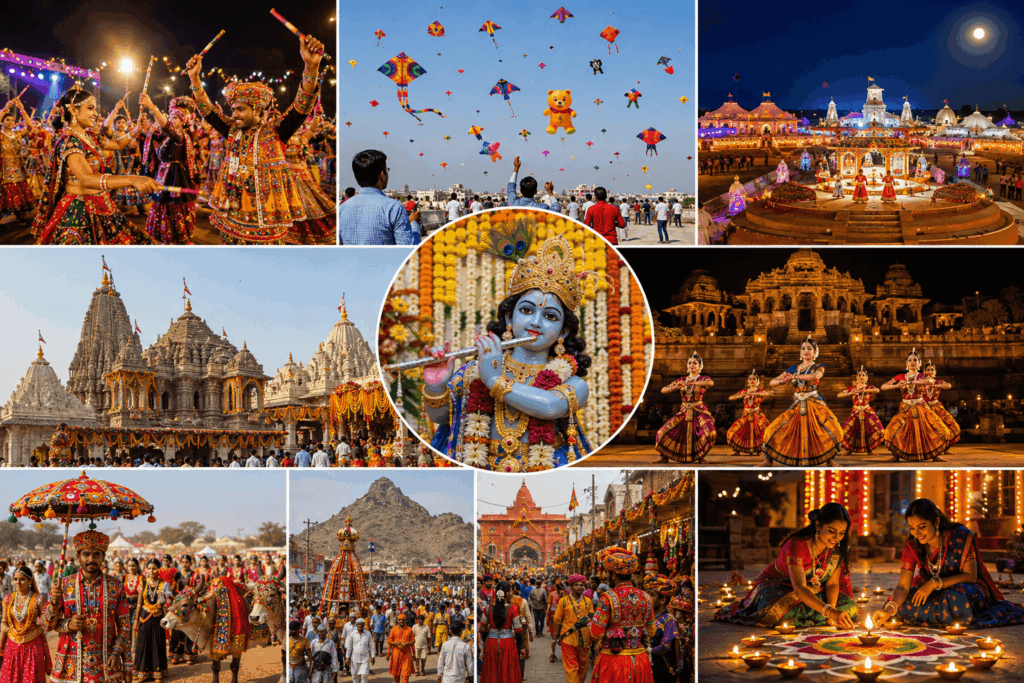
Festivals of Gujarat: A Colourful Celebration of Culture, Tradition and Joy
Gujarat is a land where celebrations are rarely quiet.
From the rhythmic beats of the dhol and the colourful movements of Garba to the bright kites filling the winter sky, festivals in Gujarat bring people together in a way that is both energetic and deeply rooted in tradition.
Every festival has its own story, food, music and customs. Some are celebrated across the state, while others are closely connected with particular communities or regions. For a traveller, these celebrations offer something more than entertainment—they provide a chance to experience Gujarat’s culture as it is truly lived.
If you are planning a trip to Gujarat, here are some of the most beautiful and famous festivals that deserve your attention.
1. Navratri – The Festival Gujarat Dances For
If there is one festival that represents the spirit of Gujarat, it has to be Navratri.
For nine nights, cities and villages across Gujarat come alive with Garba and Dandiya Raas. People dress in colourful traditional clothes, gather in large open grounds and dance to energetic folk music late into the night.
Women often wear beautifully embroidered chaniya cholis, while men dress in colourful kediyu and traditional outfits. The atmosphere is full of music, lights, laughter and movement.
Ahmedabad, Vadodara, Surat and Rajkot are among the places where Navratri celebrations can become especially lively.
What makes Gujarat’s Navratri special is that Garba is not simply a performance. It is a celebration in which people of different ages and backgrounds join together.
Best for: Culture, traditional dance, music, photography and experiencing Gujarat’s festive spirit.
2. Uttarayan – When the Sky Turns Into a Festival
Every January, Gujarat looks up.
Uttarayan, the famous kite festival, transforms the skies over cities such as Ahmedabad into a colourful display of thousands of kites.
People begin preparing for the festival well in advance, buying colourful kites and special kite strings. On the festival day, rooftops become gathering places where families and friends fly kites, enjoy music and share traditional food.
The atmosphere is especially lively in Ahmedabad, where the International Kite Festival has become an important attraction for visitors from India and around the world.
And then there is the food. Undhiyu, jalebi, chikki and other Gujarati favourites make the festival even more memorable.
Best for: Families, photography, food lovers and unique cultural experiences.
3. Rann Utsav – A Festival in the White Desert
Few festivals in India have a setting quite like the Rann Utsav.
Held in the Kutch region, this colourful celebration takes place against the extraordinary landscape of the Great Rann of Kutch. The white salt desert becomes a backdrop for traditional music, folk dance, handicrafts, cultural performances and local cuisine.
Visitors can explore artisan stalls, enjoy folk performances and experience the distinctive culture of Kutch. At night, the vast white landscape under a clear sky creates an unforgettable atmosphere.
The festival is also a great opportunity to discover the craftsmanship of Kutch, particularly its textiles, embroidery, pottery and traditional artwork.
Best for: Culture, photography, handicrafts, desert experiences and families.
4. Janmashtami – Celebrating the Birth of Lord Krishna
Gujarat has a special connection with Lord Krishna, particularly through the sacred city of Dwarka.
Janmashtami, which celebrates the birth of Lord Krishna, is therefore an important festival in the state. Temples are decorated, devotional songs fill the air and devotees gather for prayers and celebrations.
Dwarkadhish Temple in Dwarka becomes a major centre of activity during the festival.
For travellers interested in India’s spiritual traditions, experiencing Janmashtami in Gujarat can provide a fascinating glimpse into the state’s religious heritage.
Best for: Spiritual travel, temple visits and cultural experiences.
5. Modhera Dance Festival – Culture Under the Stars
The Modhera Dance Festival is a beautiful meeting of classical Indian dance and historic architecture.
Held near the magnificent Sun Temple at Modhera, the festival brings together performers and audiences in a setting that feels almost magical after sunset.
Classical dance performances take place against the backdrop of the intricately carved temple, creating a unique combination of art, history and architecture.
For anyone interested in India’s classical traditions, this is an experience worth adding to a Gujarat itinerary.
Best for: Art lovers, history enthusiasts, photographers and culture seekers.
6. Tarnetar Fair – Folk Traditions Come Alive
The Tarnetar Fair is one of Gujarat’s colourful traditional fairs, held near the Trishanku-style temple of Trinetreshwar Mahadev in the Surendranagar region.
The fair is known for folk music, traditional dance, colourful costumes, handicrafts and local traditions. Visitors can see communities from the surrounding region come together to celebrate their heritage.
The beautifully decorated umbrellas carried by young men are one of the distinctive features associated with the fair.
Unlike large urban festivals, Tarnetar offers travellers an opportunity to experience a more traditional and rural side of Gujarat.
Best for: Folk culture, photography, traditional crafts and offbeat travel.
7. Bhavnath Mahadev Fair – A Spiritual Celebration
Held near the foothills of Mount Girnar in Junagadh, the Bhavnath Mahadev Fair is an important religious gathering.
The fair is associated with Lord Shiva and attracts devotees, sadhus and visitors from different parts of the country.
The surroundings add to the experience. The ancient landscape of Girnar, temples and spiritual atmosphere make this more than just a fair—it is a cultural and religious experience.
Best for: Spiritual journeys, culture and exploring Junagadh.
8. Shamlaji Mela – A Traditional Tribal Gathering
The Shamlaji Mela is held around the historic Shamlaji Temple in northern Gujarat.
The fair attracts pilgrims as well as tribal communities from nearby regions. Traditional music, colourful clothing, local markets and religious rituals create a lively atmosphere.
It is an interesting festival for travellers who want to understand the cultural diversity of Gujarat beyond its major cities.
Best for: Culture, spirituality, local traditions and photography.
9. Vautha Mela – Gujarat’s Traditional Animal Fair
Vautha Mela is one of Gujarat’s distinctive traditional fairs and is historically associated with livestock trading.
The fair takes place near the confluence of rivers in the Ahmedabad district and brings together traders, pilgrims and rural communities.
Camels, donkeys and other livestock have traditionally been an important part of the fair. Alongside the trading activity, visitors can experience local food, religious traditions and village culture.
Best for: Rural Gujarat, traditional fairs and cultural photography.
10. Diwali – Lights, Food and Family Celebrations
Like the rest of India, Gujarat celebrates Diwali with great enthusiasm.
Homes and shops are decorated with lamps, rangoli and colourful decorations. Families come together, prepare sweets and traditional dishes, exchange gifts and welcome the festive season.
For travellers, Diwali can be a wonderful time to experience Gujarat’s cities when streets and markets are filled with lights and festive energy.
The days surrounding Diwali also offer opportunities to explore Gujarat’s food traditions, shopping streets and local markets.
Best for: Families, food lovers, shopping and cultural experiences.
Why Gujarat’s Festivals Are So Special
Gujarat’s festivals are not simply dates on a calendar. They are deeply connected to the state’s everyday culture.
Music, dance, food, religion, craftsmanship and community all come together during these celebrations. A festival can turn a normal street into a gathering place, a rooftop into a viewing platform or a desert into a colourful cultural centre.
For travellers, this creates opportunities to see Gujarat beyond its monuments and tourist attractions.
You do not simply visit Gujarat during a festival—you experience it.
Best Time to Experience Gujarat’s Festivals
The ideal time depends on the festival you want to attend.
Navratri is celebrated around September or October, depending on the Hindu calendar.
Uttarayan takes place in January, with the main celebration on 14 January.
Rann Utsav generally takes place during the cooler months and is one of the state’s major tourism attractions.
Other fairs and festivals follow their own traditional calendars, so it is worth checking the official dates before planning your trip.
Tips for Enjoying Festivals in Gujarat
A little preparation can make your festival experience much better.
- Book accommodation early for major festivals such as Navratri and Rann Utsav.
- Wear comfortable clothes and footwear, especially if you plan to attend Garba events.
- Respect local religious customs when visiting temples and spiritual festivals.
- Ask permission before photographing people closely.
- Try traditional Gujarati food whenever possible.
- Carry water and stay hydrated during outdoor celebrations.
- Keep your belongings secure in crowded festival areas.
- Support local artisans by purchasing authentic handicrafts directly from them.
- Check event schedules before travelling, as dates can change each year.
Final Thoughts
The festivals of Gujarat show a side of the state that you cannot fully discover by visiting monuments alone.
During Navratri, the streets and grounds come alive with Garba. During Uttarayan, the sky becomes a canvas of colourful kites. In Kutch, the Rann Utsav brings music, crafts and tradition to the white desert, while religious celebrations in Dwarka, Junagadh and other parts of the state reveal Gujarat’s deep spiritual heritage.
Whether you love photography, food, music, history or simply meeting people, Gujarat’s festivals offer countless reasons to visit.
And perhaps the best part is the feeling you take home—the sound of dhol beats, the colours of traditional clothes, the taste of local food and memories of being part of a celebration that feels genuinely alive.