
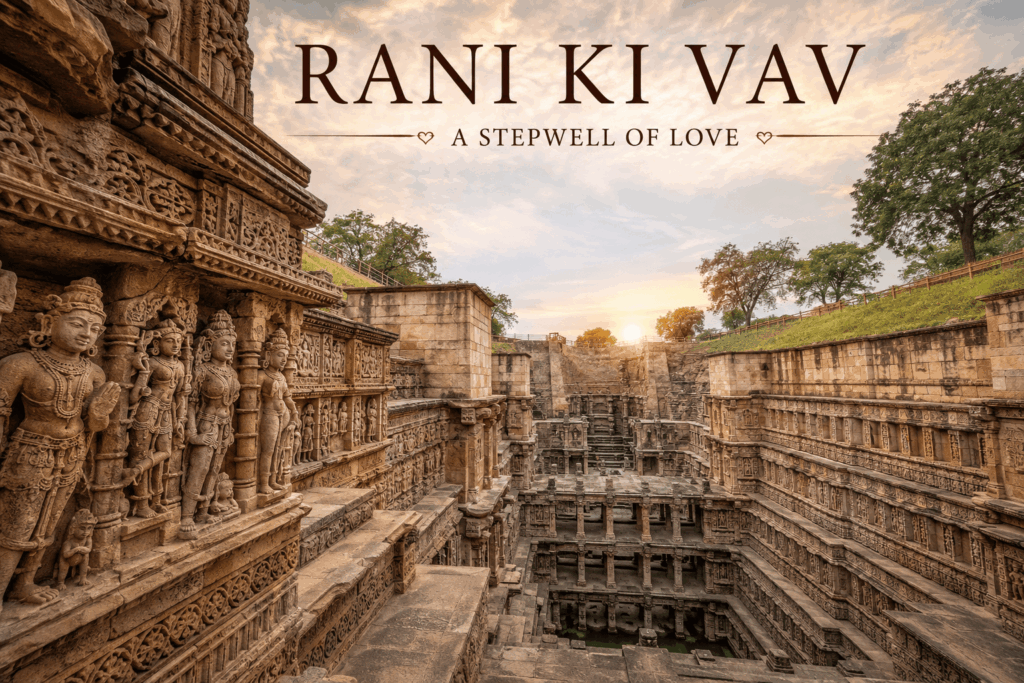
Hidden beneath the quiet beauty of Patan in Gujarat lies a masterpiece of Indian architecture—Rani Ki Vav, a stepwell built not simply as a source of water, but as a remarkable expression of love, devotion, and craftsmanship.
Recognized as a UNESCO World Heritage Site, Rani Ki Vav is one of the finest examples of stepwell architecture in India. As you walk down its grand flights of stairs, you slowly enter a world filled with beautifully carved sculptures, intricate pillars, and stories from Indian mythology.
The Story Behind Rani Ki Vav
Rani Ki Vav was built in the 11th century by Queen Udayamati in memory of her husband, King Bhimdev I of the Solanki dynasty. It is believed to have been constructed around the late 11th century, making it more than a thousand years old.
What makes the monument especially touching is its purpose. The queen did not build an ordinary memorial. She created an extraordinary architectural work that also served a practical purpose—providing water to the people.
This combination of love, remembrance, and public welfare gives Rani Ki Vav its unique character.
An Architectural Wonder Beneath the Ground
Unlike many monuments that rise toward the sky, Rani Ki Vav takes visitors deep into the earth.
The stepwell is designed like an inverted temple, with seven levels of stairs leading toward the water. Each level is decorated with beautifully carved pillars and sculptures. The deeper you walk, the more detailed the architecture becomes.
The walls are covered with thousands of sculptures depicting gods, goddesses, celestial beings, mythological figures, and everyday scenes. Vishnu and his different avatars feature prominently among the carvings.
Every sculpture seems to tell a story, turning the stepwell into something much more than a water structure.
A Walk Through History
Standing at the top of Rani Ki Vav, it can be difficult to imagine how much effort went into creating such a monument centuries ago.
As you descend the steps, the atmosphere changes. The surrounding noise gradually fades, and the impressive stonework begins to dominate your view. The symmetry of the corridors, the detailed carvings, and the enormous scale of the structure make the experience unforgettable.
It feels almost like walking through an open-air museum carved entirely in stone.
Why Is Rani Ki Vav Called a Stepwell of Love?
The title is more than poetic.
Rani Ki Vav was commissioned by Queen Udayamati as a memorial for her husband. At the same time, it provided water for the local community. This makes the monument a beautiful example of how personal emotions and public responsibility could come together in Indian architecture.
The queen’s tribute has survived for centuries, allowing visitors today to experience a story of love expressed through stone.
The Sculptures of Rani Ki Vav
One of the most fascinating aspects of Rani Ki Vav is its sculpture work.
The walls feature an incredible variety of figures, including representations of Hindu deities, apsaras, mythological characters, and ornamental designs. Many sculptures are remarkably expressive, with carefully carved jewelry, hairstyles, clothing, and facial features.
The level of detail is particularly impressive considering the tools and technology available to the craftsmen at the time.
For photography lovers, history enthusiasts, and architecture admirers, almost every corner offers something worth stopping to admire.
Rani Ki Vav and UNESCO
Rani Ki Vav was added to the UNESCO World Heritage List in 2014, recognizing its outstanding architectural and cultural significance.
Its design, artistic quality, and connection with the traditions of Indian stepwell architecture make it an important part of India’s heritage.
Today, the monument stands as a reminder of the extraordinary skills of the craftsmen of medieval Gujarat.
Best Time to Visit Rani Ki Vav
The cooler months are generally the most comfortable time to explore Rani Ki Vav. October to March is a popular period for visiting Gujarat because the weather is more pleasant for sightseeing.
Try visiting in the morning or later in the afternoon if you want to explore the monument comfortably and enjoy better light for photography.
How to Reach Rani Ki Vav
Rani Ki Vav is located in Patan, Gujarat, around 125 km from Ahmedabad.
Patan is well connected by road with major cities in Gujarat. The nearest major airport is Ahmedabad, from where visitors can continue their journey by road.
The stepwell can also be combined with other attractions in Gujarat, making it a worthwhile stop on a wider Gujarat heritage tour.
More Than Just a Monument
Rani Ki Vav is often described as an architectural masterpiece, but its real charm goes beyond its design.
It represents the vision of a queen, the skills of generations of craftsmen, the importance of water in Indian society, and a story of remembrance that has survived for nearly a thousand years.
Every staircase leads you a little deeper into history, while every sculpture reveals another detail of the world in which this magnificent stepwell was created.
Final Thoughts
Rani Ki Vav is not just a stepwell—it is a story carved in stone.
It tells a story of love, devotion, architecture, mythology, and the importance of water. From its magnificent sculptures to its carefully planned underground structure, every part of Rani Ki Vav reflects the creativity and craftsmanship of medieval India.
If you are exploring Gujarat and want to experience India’s heritage beyond the usual monuments, a visit to Rani Ki Vav in Patan should definitely be on your list. Take your time, walk down its ancient steps, and look closely at the carvings—you may find that the deeper you go, the more fascinating the story becomes.